

A visual identity system honoring a legacy and establishing a flexible framework
CHALLENGE
The inaugural Bob & Sherry Faust Distinguished Lecture required a visual identity that honored the work of Robert L. Faust, Professor Emeritus of Architecture at Auburn University, while providing a flexible, long-term system for future events. The design needed to pay tribute to Faust’s hand-drawn, organic forms, allow for varied imagery and maintain consistency across printed and digital materials for at least five years.
In spring 2023, the Auburn University School of Architecture, Planning and Landscape Architecture hosted the inaugural Bob & Sherry Faust Distinguished Lecture, a celebration of the life and legacy of Professor Emeritus Robert L. Faust. The second annual event, held in spring 2024, continued using the visual identity established in 2023, which was crafted to be durable and versatile enough to represent the series for up to five years.
APPROACH
Organic forms were drawn directly from Faust’s architectural sketches and images of his work and then layered into adaptable compositions for use across invitations, posters, programs and more. A greyscale palette was chosen to echo the monochromatic nature of the original drawings and to allow photography and other imagery to stand out. The system was designed to balance tribute and functionality, creating a flexible identity that could evolve with each year’s lecture while maintaining a consistent, recognizable look.
OUTCOME
The resulting identity system successfully honors Bob Faust’s legacy while providing a cohesive framework for event communications. The flexible approach has supported multiple years of lectures—and handoff to another designer. By drawing on the architect’s own forms, the system creates a visual connection between the lecture and Faust’s body of work while remaining functional and adaptable.
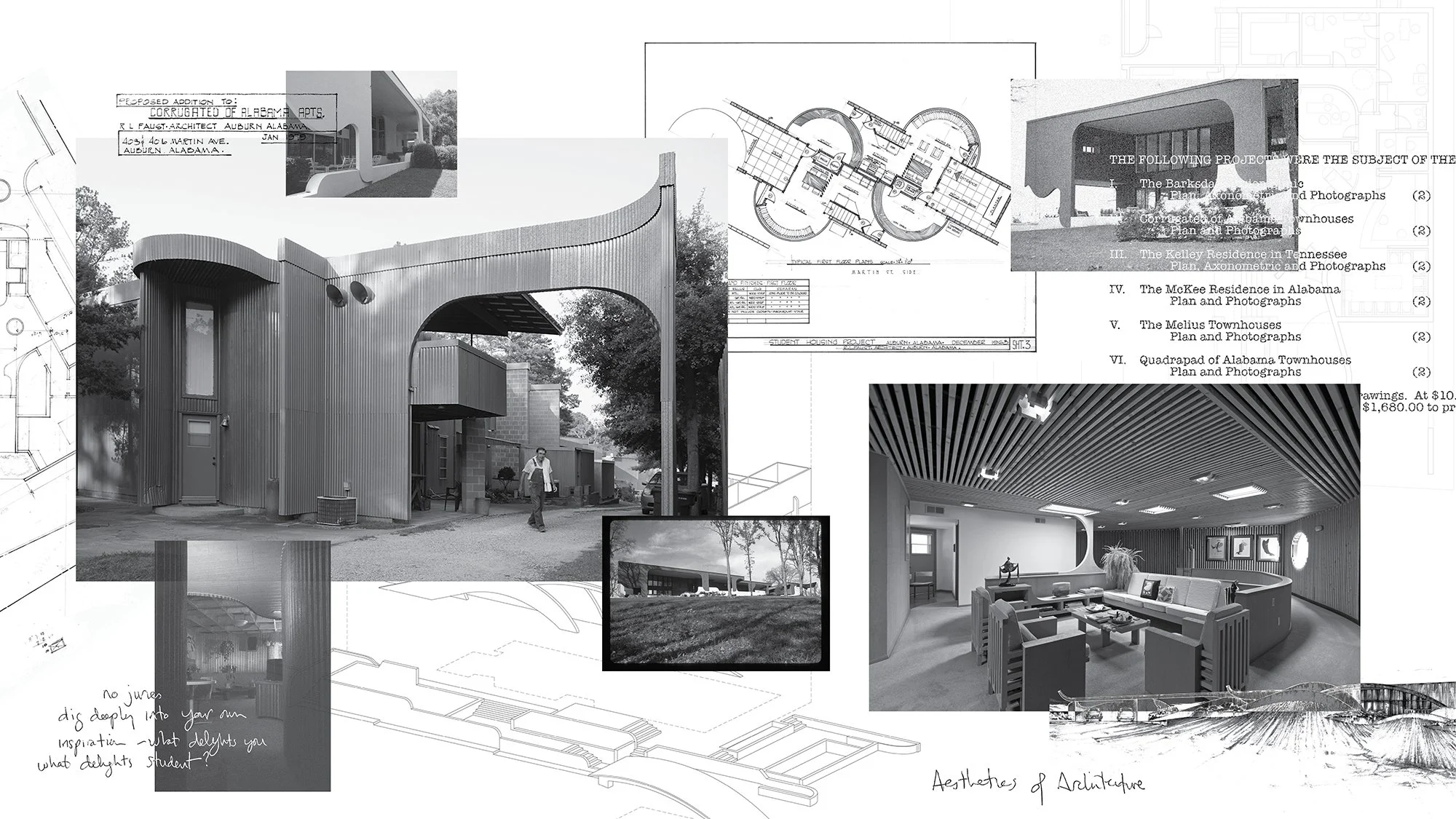
A study of Faust’s architectural drawings, sketches and built work was conducted to identify recurring organic forms that later informed the visual language of the identity.
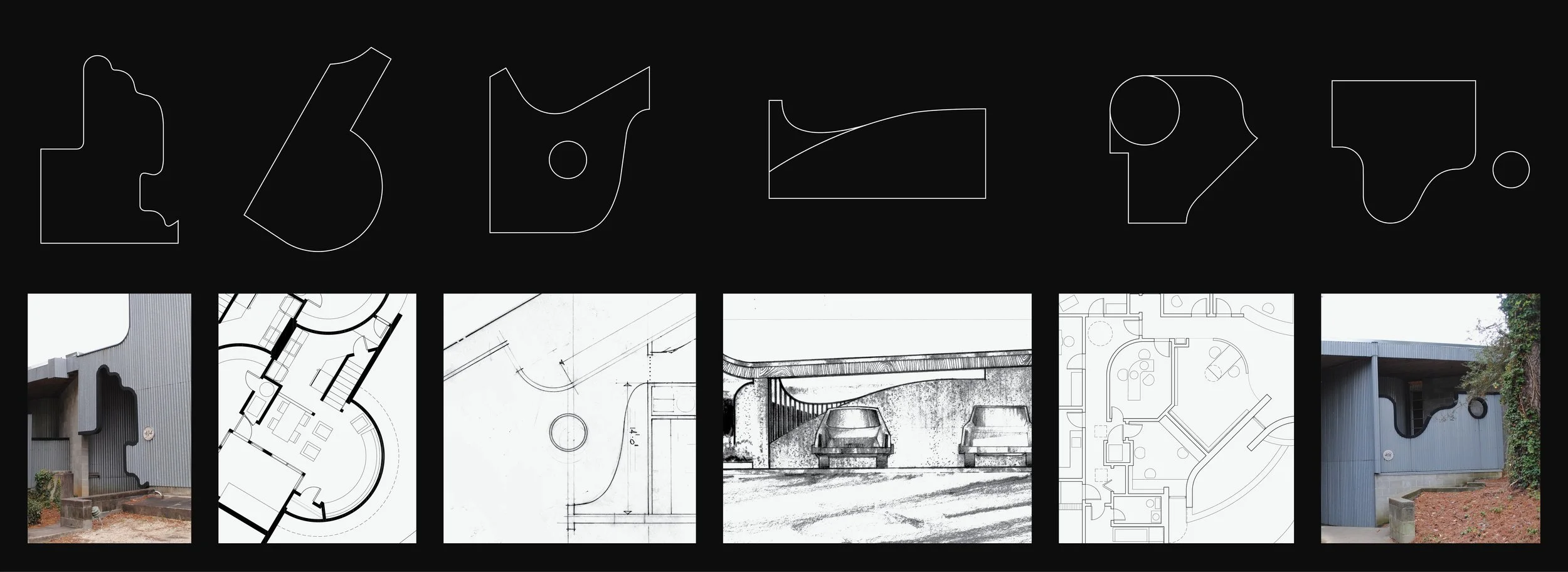
Recurring forms from Faust's work were extracted and simplified into graphic building blocks.
The graphic building blocks were first applied to an information-heavy invitation.
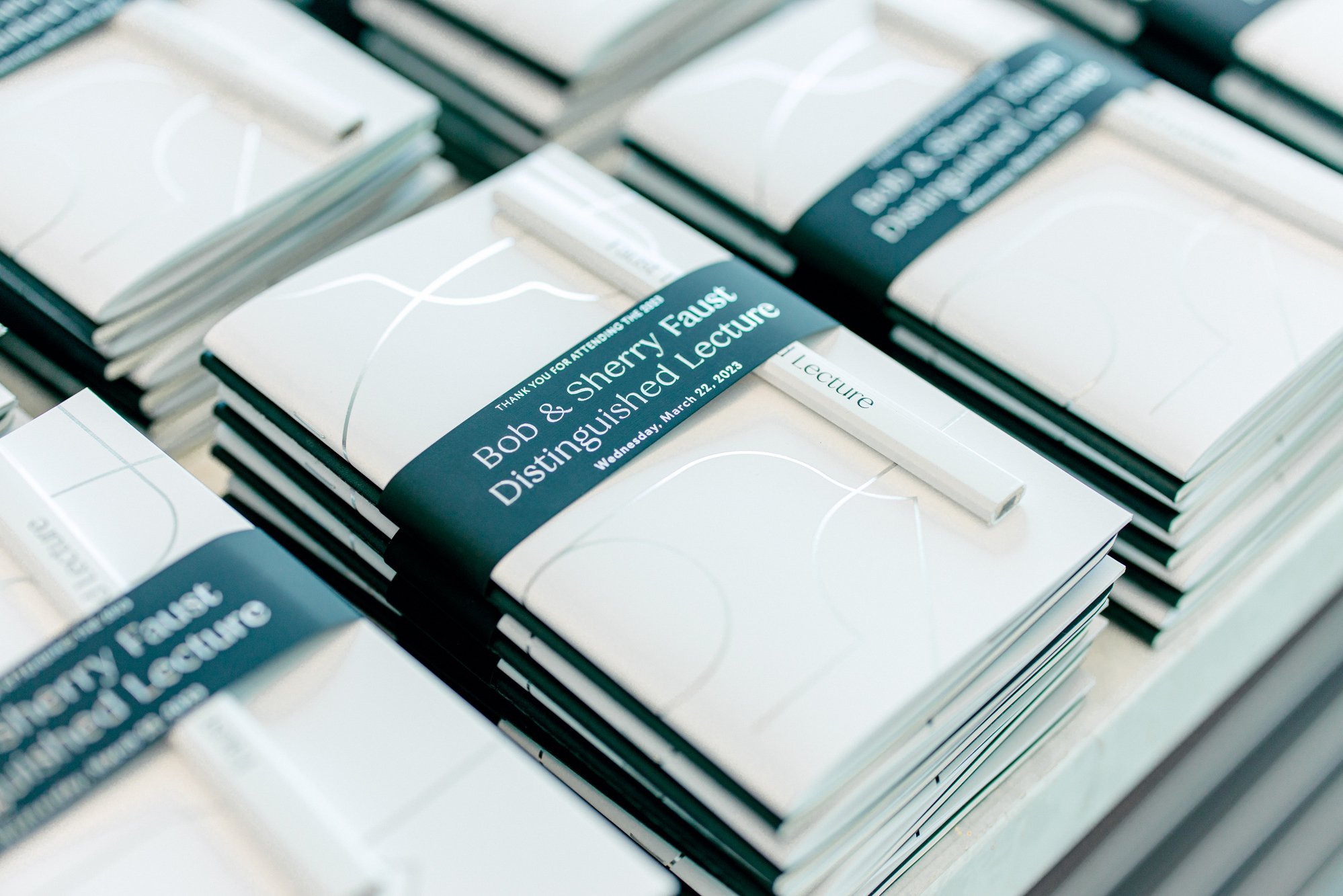
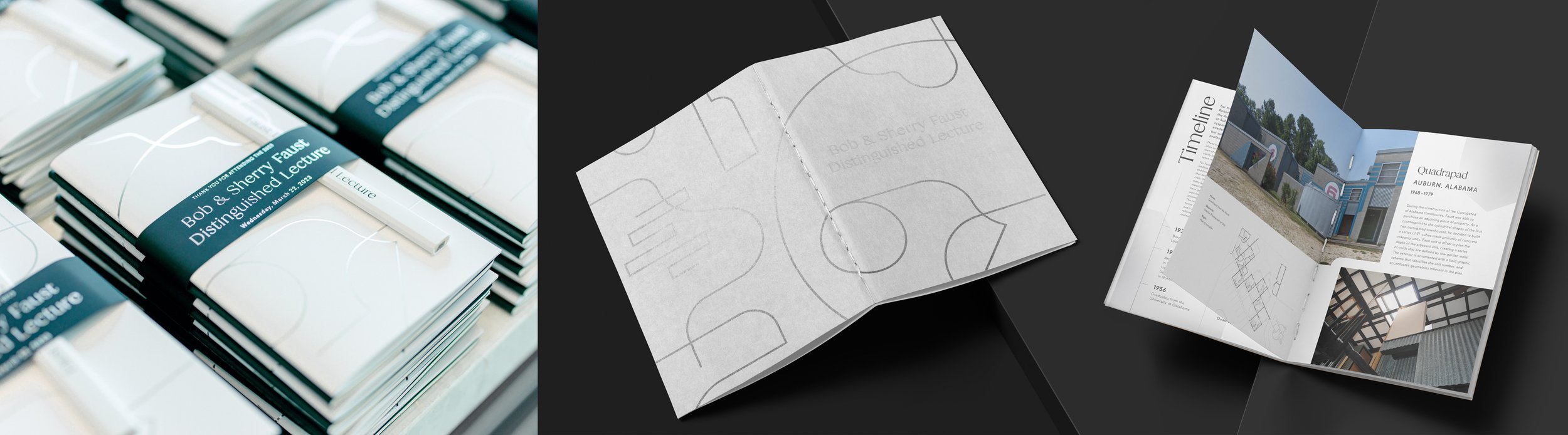
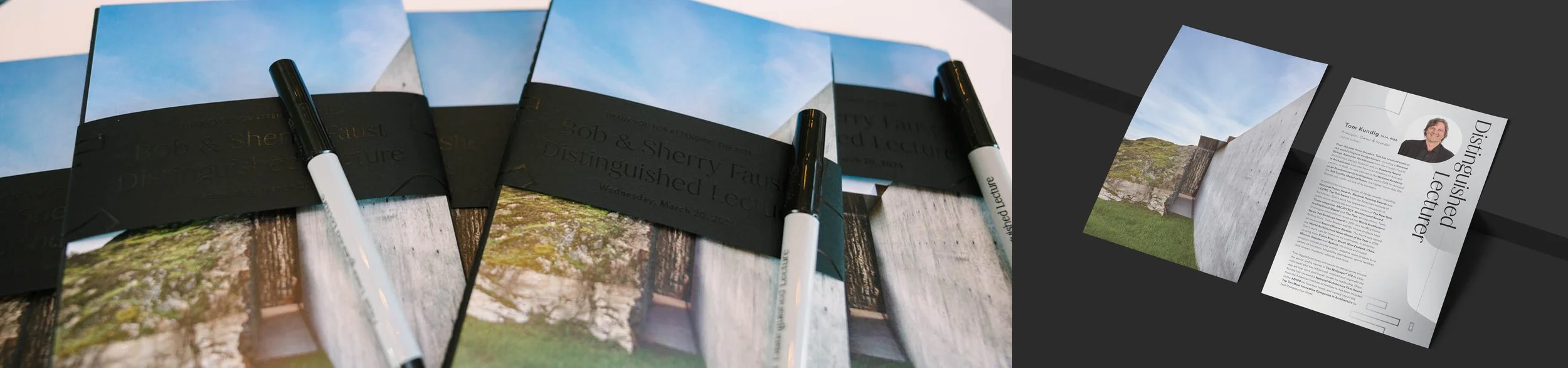
The inaugural lecture’s programs—multi-page booklets showcasing Faust’s work—were wrapped with black bellybands with silver foil. The program cover featured blind debossing of the lecture title, with outlines of the derived geometric forms stamped in silver foil. Interior spreads continued the graphic language developed from Faust’s drawings while presenting key pieces of his work.
In the second year, the program shifted to a simplified flat card, which was bound to a notebook with a tone-on-tone bellyband.
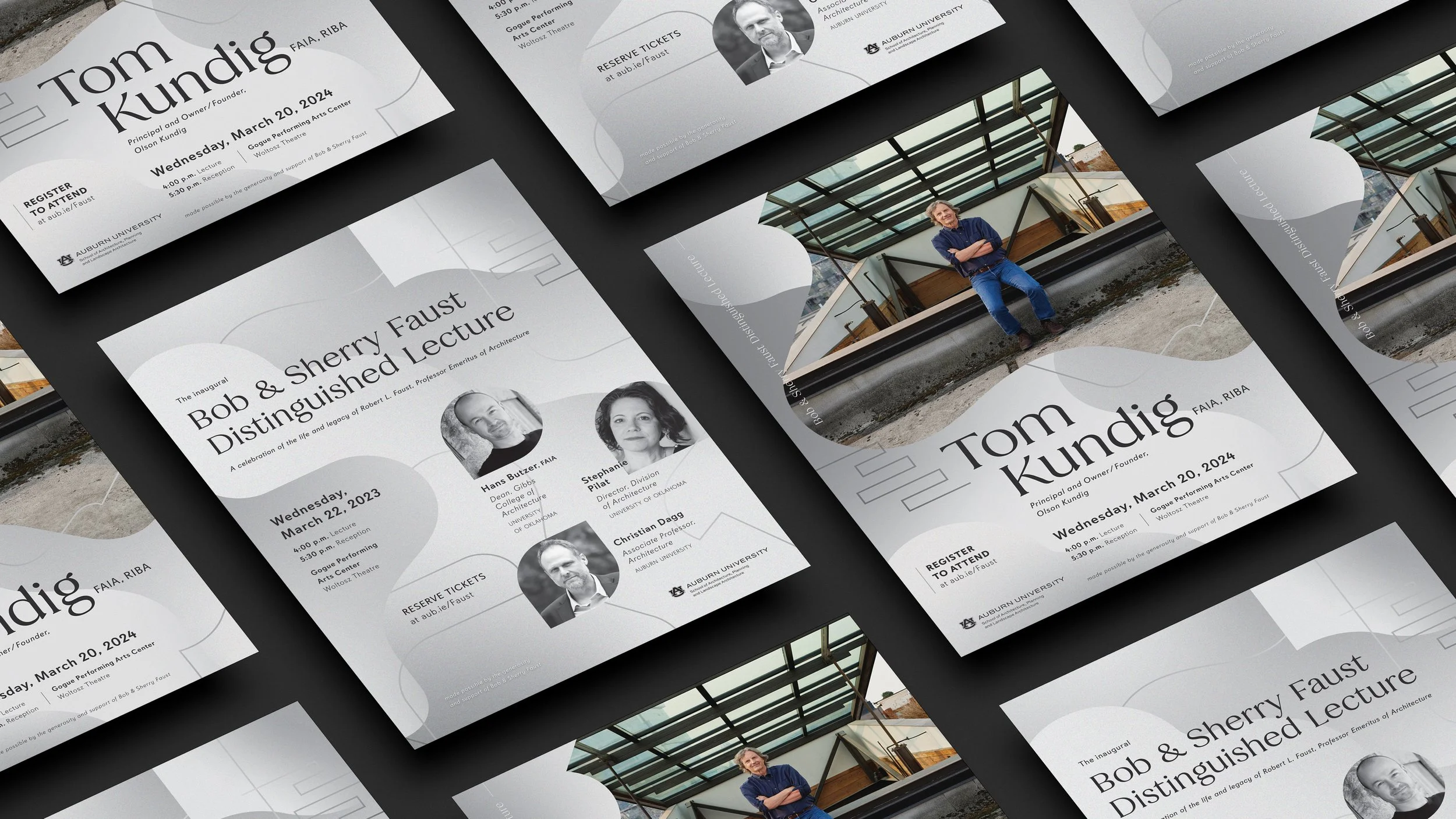
Posters from the first and second years of the lecture demonstrate how the graphic system adapted to different speakers. In the inaugural year, the forms derived from Faust’s work became the primary visual element, both as a background and holding shapes for headshots of the three Distinguished Lecturers’—all experts on Faust. In the following year, a portrait of the featured architect and his work took precedence, framed within the established shape language.
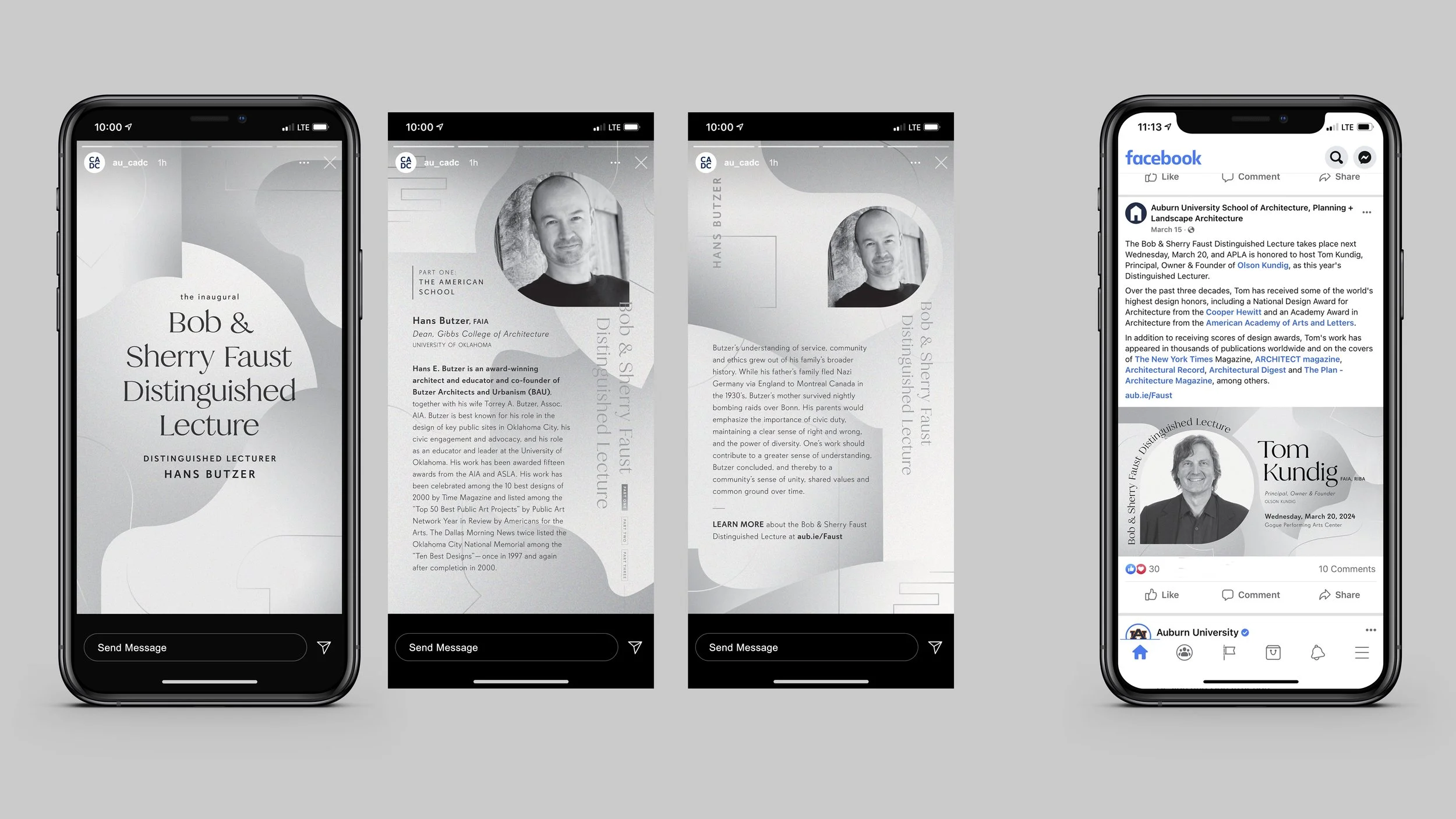
Social media graphics applied the visual system to digital platforms, adapting the shape language for both story and feed formats across the first two years of the lecture.
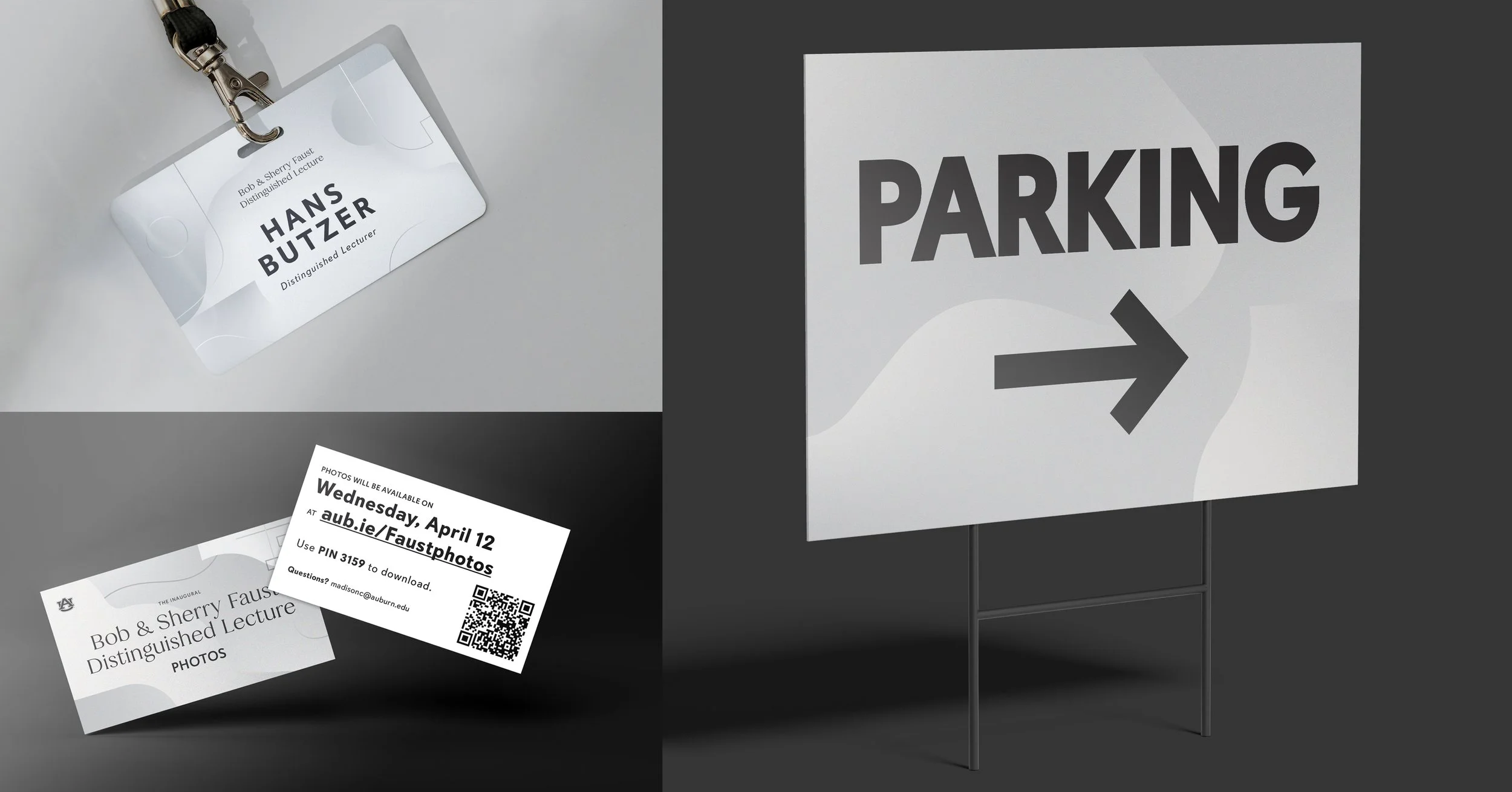
The visual system extended across event touchpoints of varying scales, from speaker and attendee materials to environmental signage. A geometric typeface and the derived shape language ensured visual consistency across applications.