

A technology-inspired visual identity system to promote the fourth annual Day of Design, a college-wide celebration of architecture and design disciplines
CHALLENGE
Day of Design 2024 required a visual identity that could engage students while reflecting emerging conversations around technology and artificial intelligence in design disciplines.
APPROACH
The identity drew inspiration from technological visual systems, incorporating circuit-like and pixel-based graphics, monospace typography and isometric grids. These elements created a visual language that referenced computing, networks and information exchange—concepts closely tied to collective intelligence and artificial intelligence. The resulting deliverables emphasized structure, repetition and modularity while maintaining clarity across print and digital applications.
OUTCOME
The resulting identity translated across posters, digital assets and event materials, creating a cohesive visual presence for the event. The technology-inspired system provided a distinct aesthetic while supporting the event’s focus on shared knowledge and collaboration.
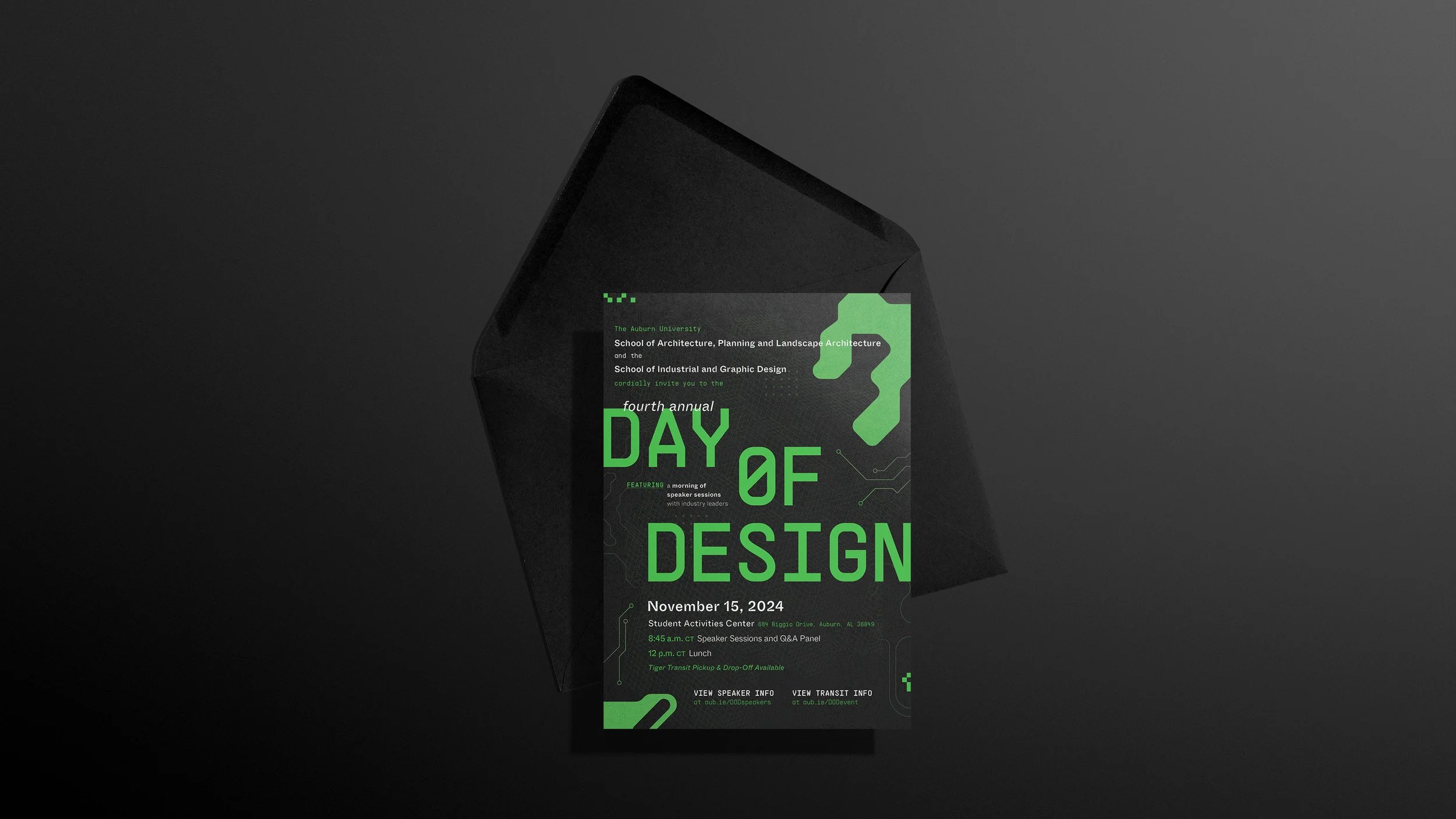
Printed invitations introduced the visual identity while communicating key event details to invitees.
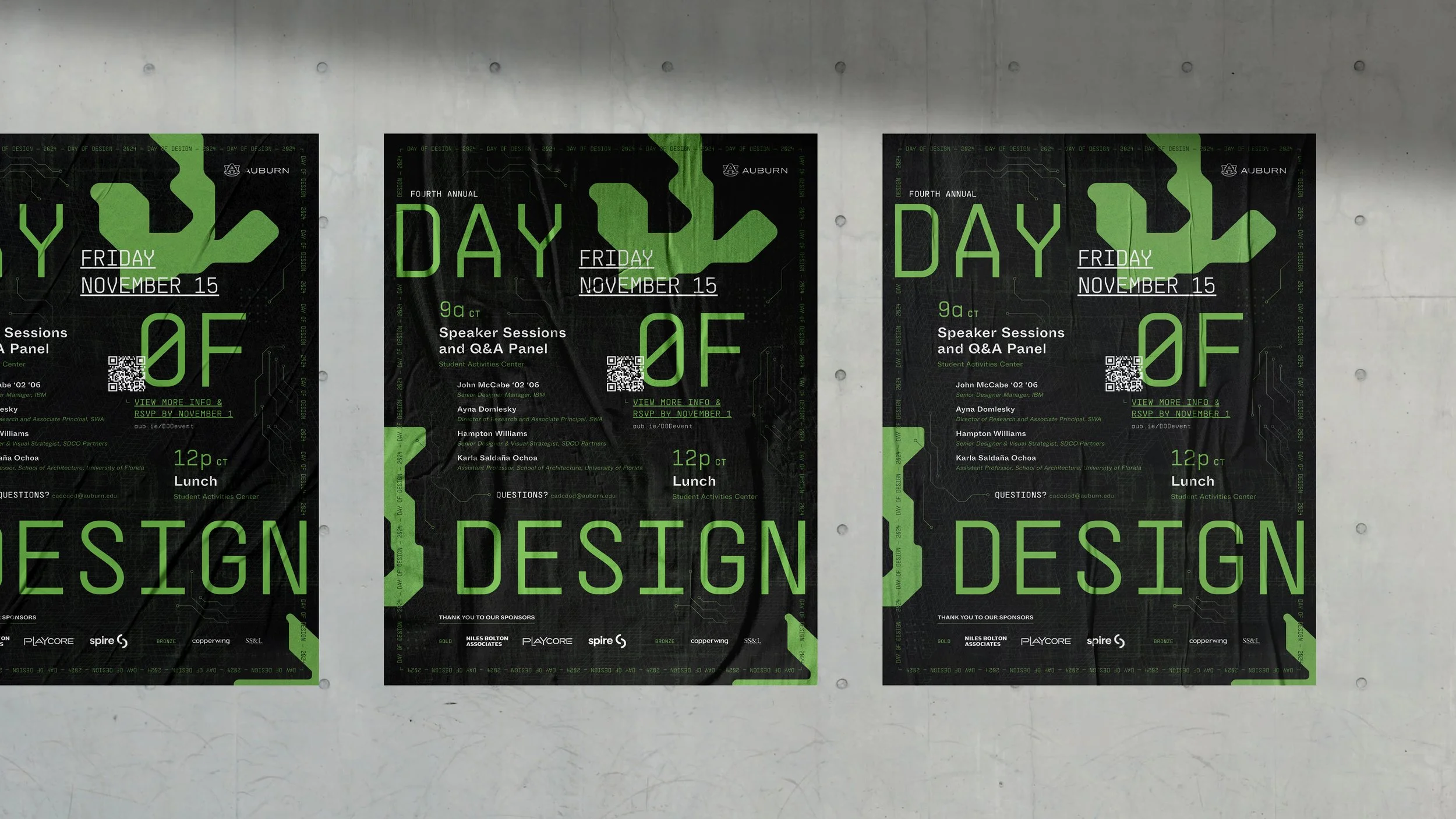
Posters promoted the event throughout campus buildings, translating the technology-inspired visual language to a large-scale format visible to students.
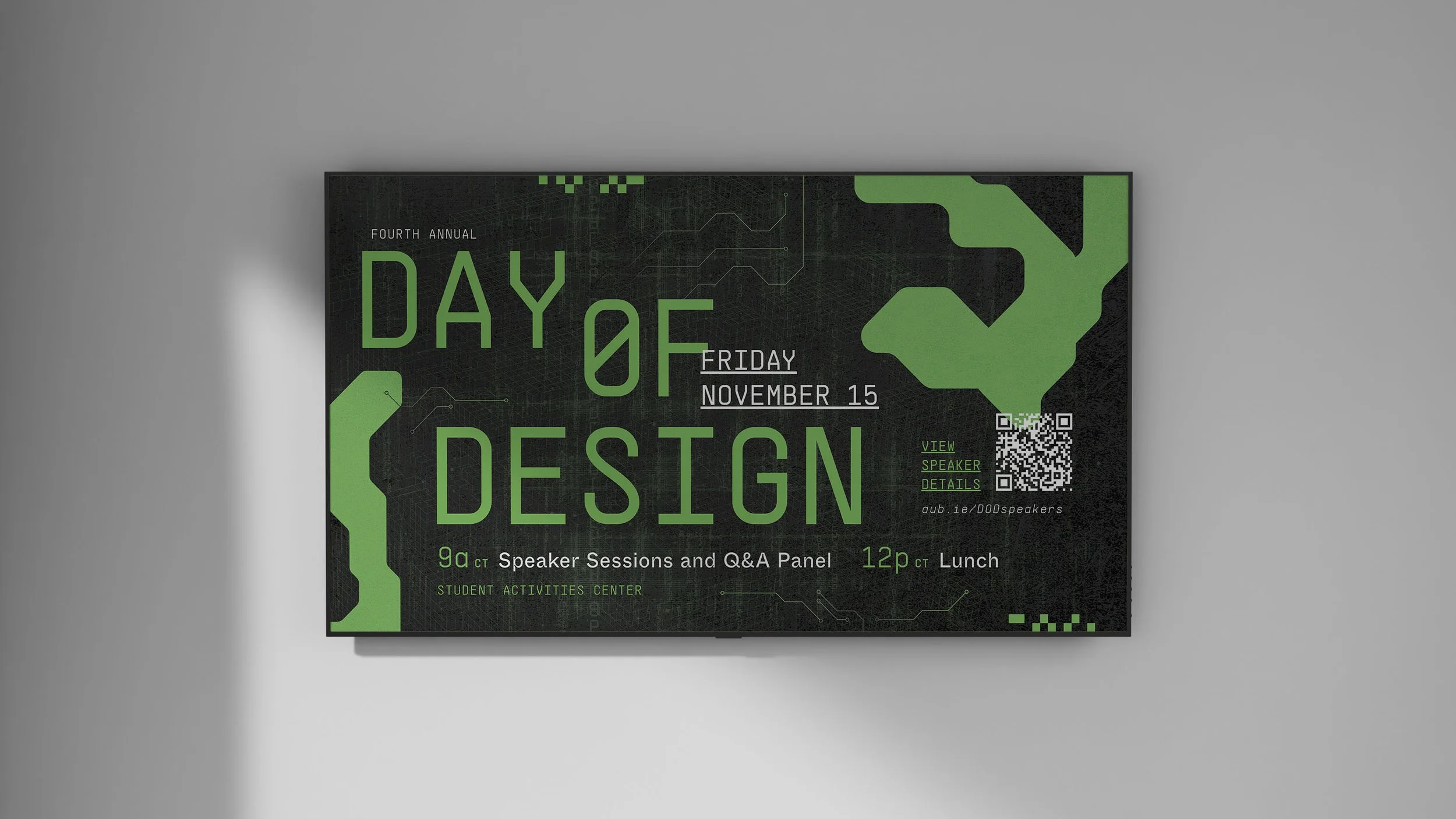
Digital monitor slides extended the event promotion across campus buildings, reinforcing the visual identity alongside printed posters in high-traffic student spaces.
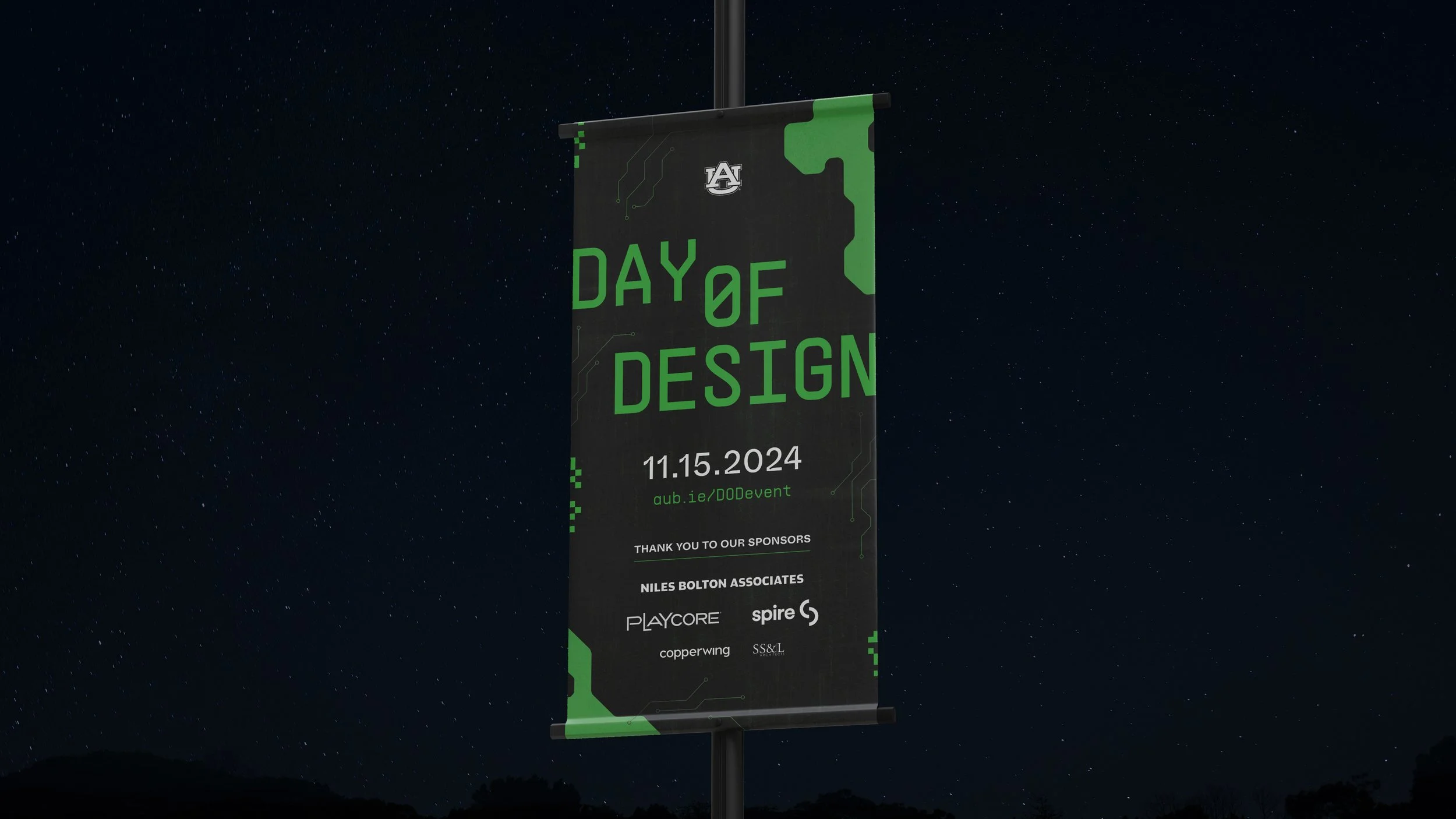
Large, narrow pole banners, displayed on light poles on Auburn’s campus, promoted the event to students, faculty/staff and visitors, emphasizing the event name and date, while keeping sponsor details at a secondary scale.
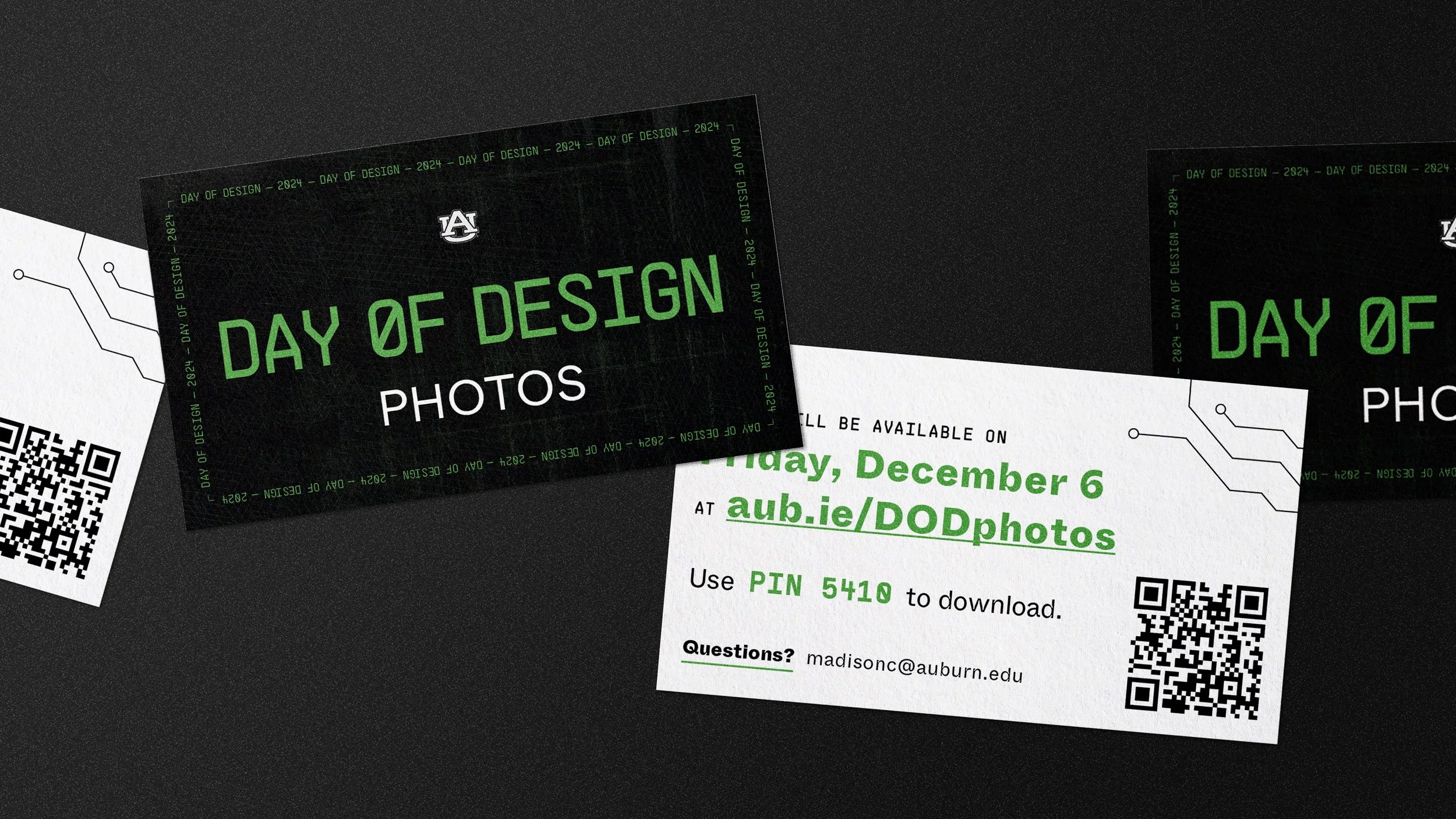
Photo cards extended the visual identity into its smallest scale.
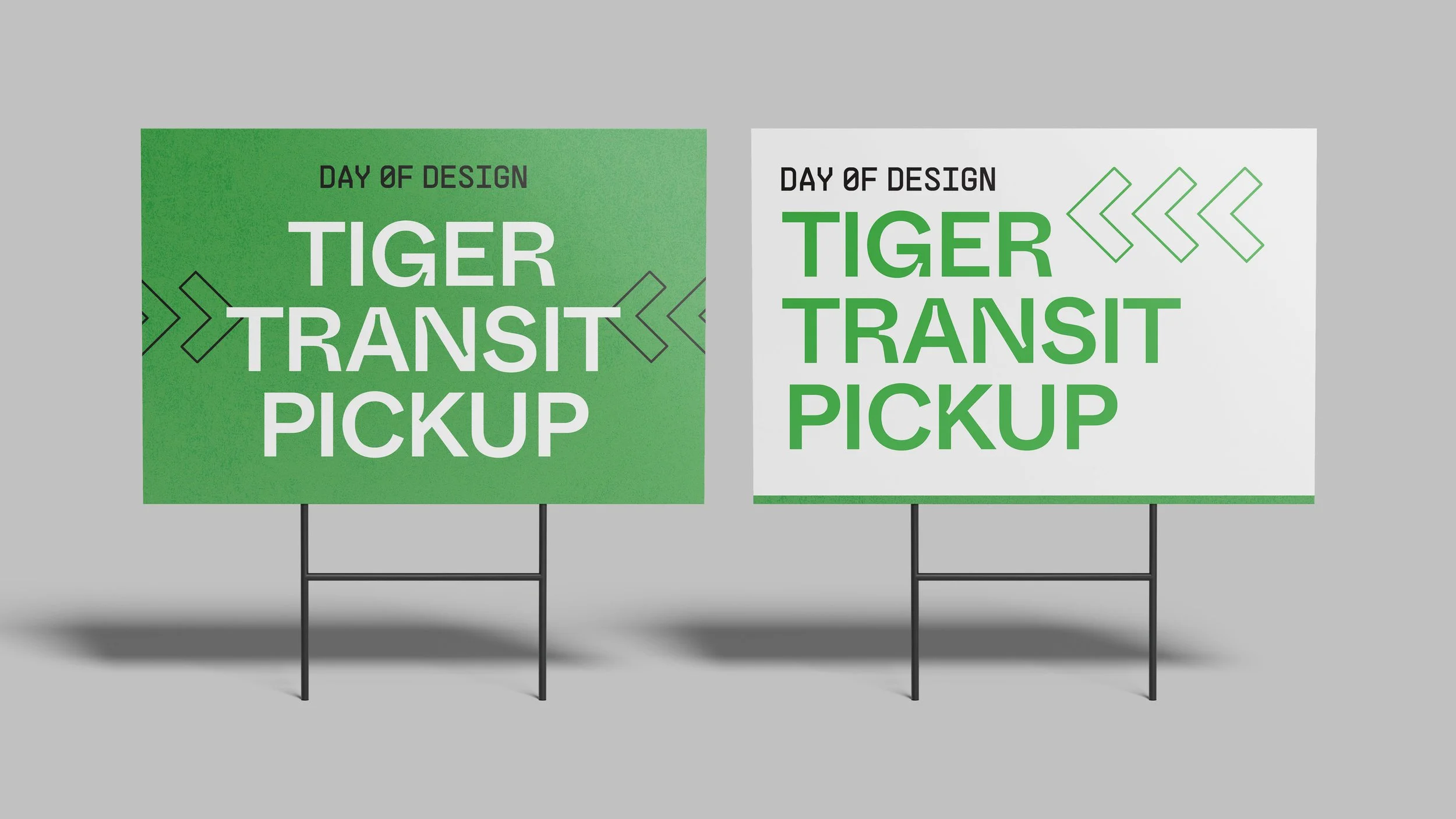
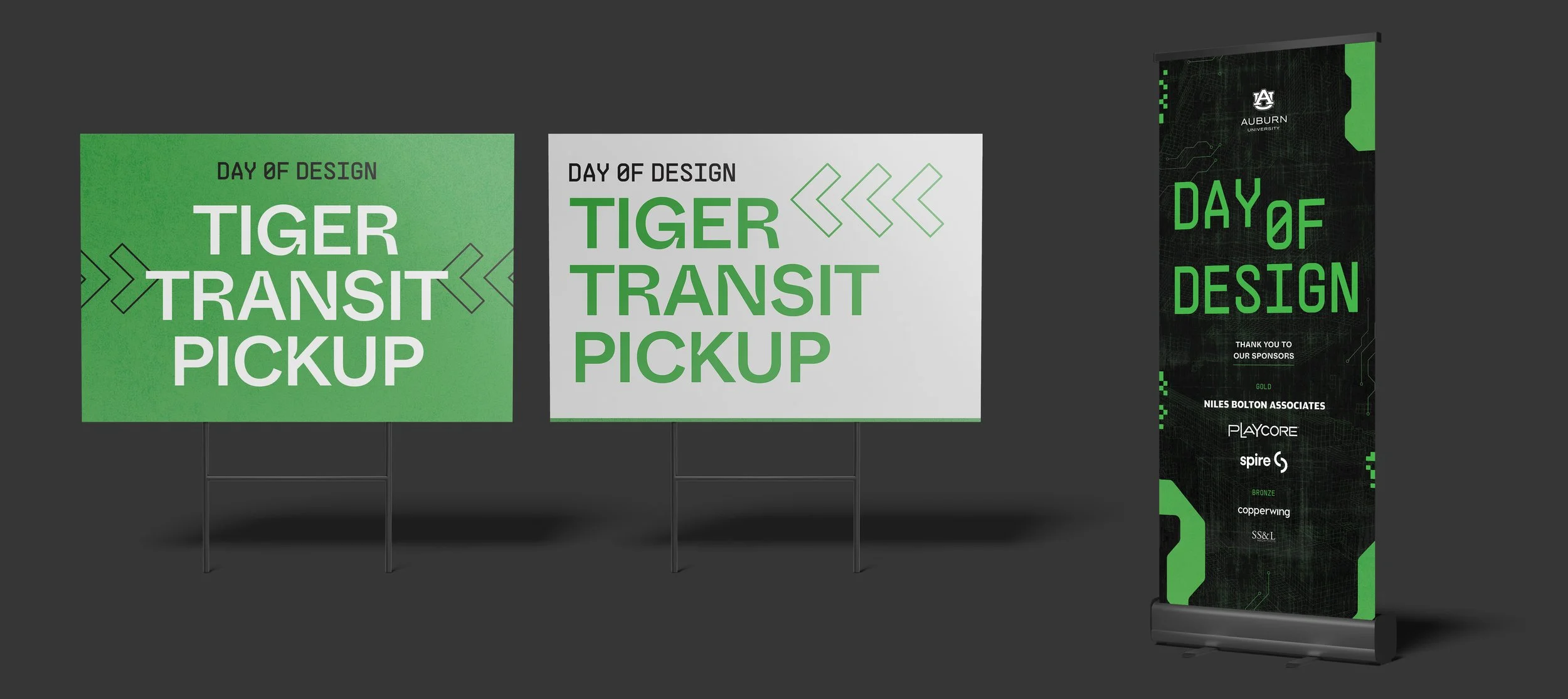
Directional signage applied the system to wayfinding materials such as student transit location identifiers.
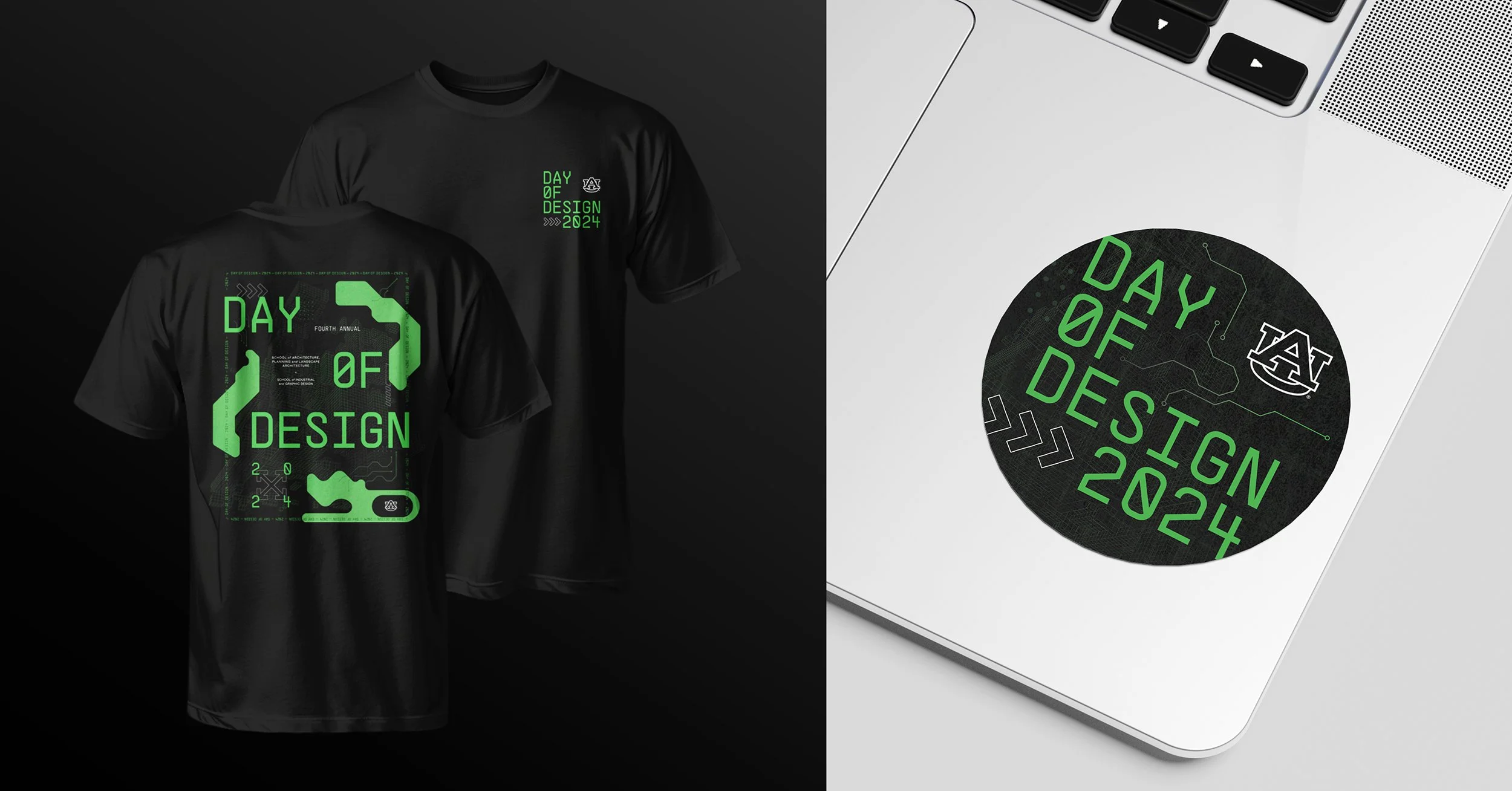
Event merchandise applied the visual identity across t-shirts and stickers, giving attendees a tangible way to interact with the branding beyond the event.
Directional and entrance signage extended the visual identity across event wayfinding and entry points, prioritizing readability for attendees moving to and through the space.