

A visual identity system to launch the inaugural Day of Design—a college-wide celebration of architecture and design disciplines featuring guest speakers
CHALLENGE
In fall 2021, Auburn’s College of Architecture, Design and Construction hosted the inaugural Day of Design—a large-scale celebration that combined the 75th anniversary of a CADC school, the 43rd annual Design Interaction speaker event and a school awards ceremony. The challenge was to design and coordinate a cohesive, multi-venue event from scratch, including branding, printed and digital invitations, promotional materials and day-of deliverables, all while ensuring a professional and engaging experience for attendees.
APPROACH
To signal the launch of a new college-wide event, the visual identity was intentionally designed to feel distinct from Auburn’s standard branding and to resonate with design-focused audience. In collaboration with colleague Courtney Windham, a continuous-line 3D form was developed to represent interaction between disciplines, becoming the central graphic element of the identity. Rotating the form produced a range of compositions that interact with the “Day of Design” title and scale across invitations, promotional graphics, programs, signage and more. A modular system ensured consistency across the numerous pieces required for the event.
OUTCOME
The inaugural Day of Design established a cohesive and professional experience for attendees, from public speaker sessions to the invitation-only awards ceremony. More than 20 print and digital deliverables were developed for the event—each with unique specifications, timelines and content requirements. The flexible visual system supported a wide range of applications, and the processes developed along the way provided a foundation for future iterations of the event.
A continuous-line 3D form, developed to represent interaction between disciplines, became the central graphic element of the identity.
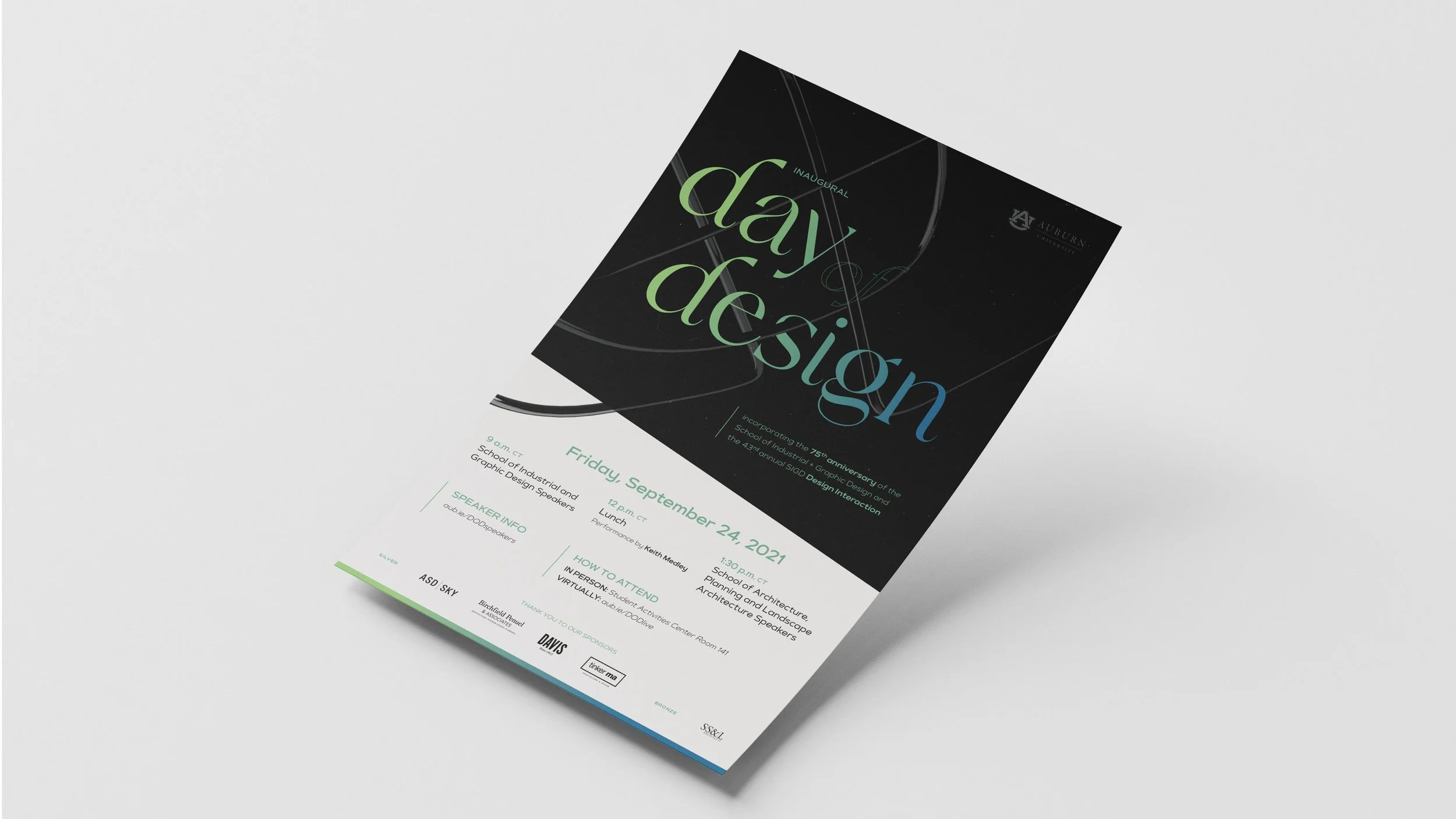
The event poster was one of two fundamental deliverables that introduced the visual identity and a key system element: alternating between black and off-white backgrounds to create contrast and visual rhythm across deliverables.
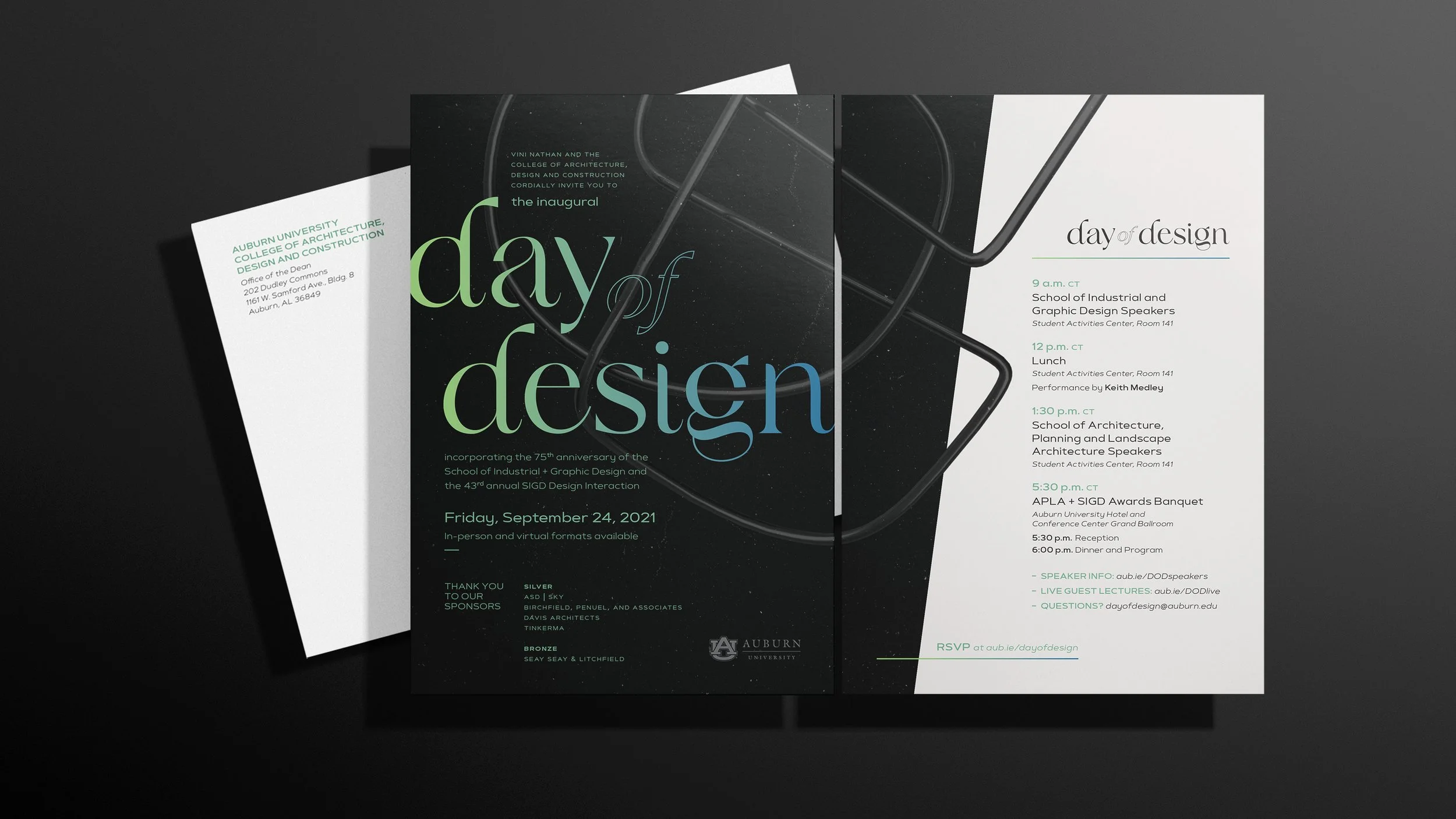
The printed invitation featured a wraparound composition, extending the central graphic element across both sides.
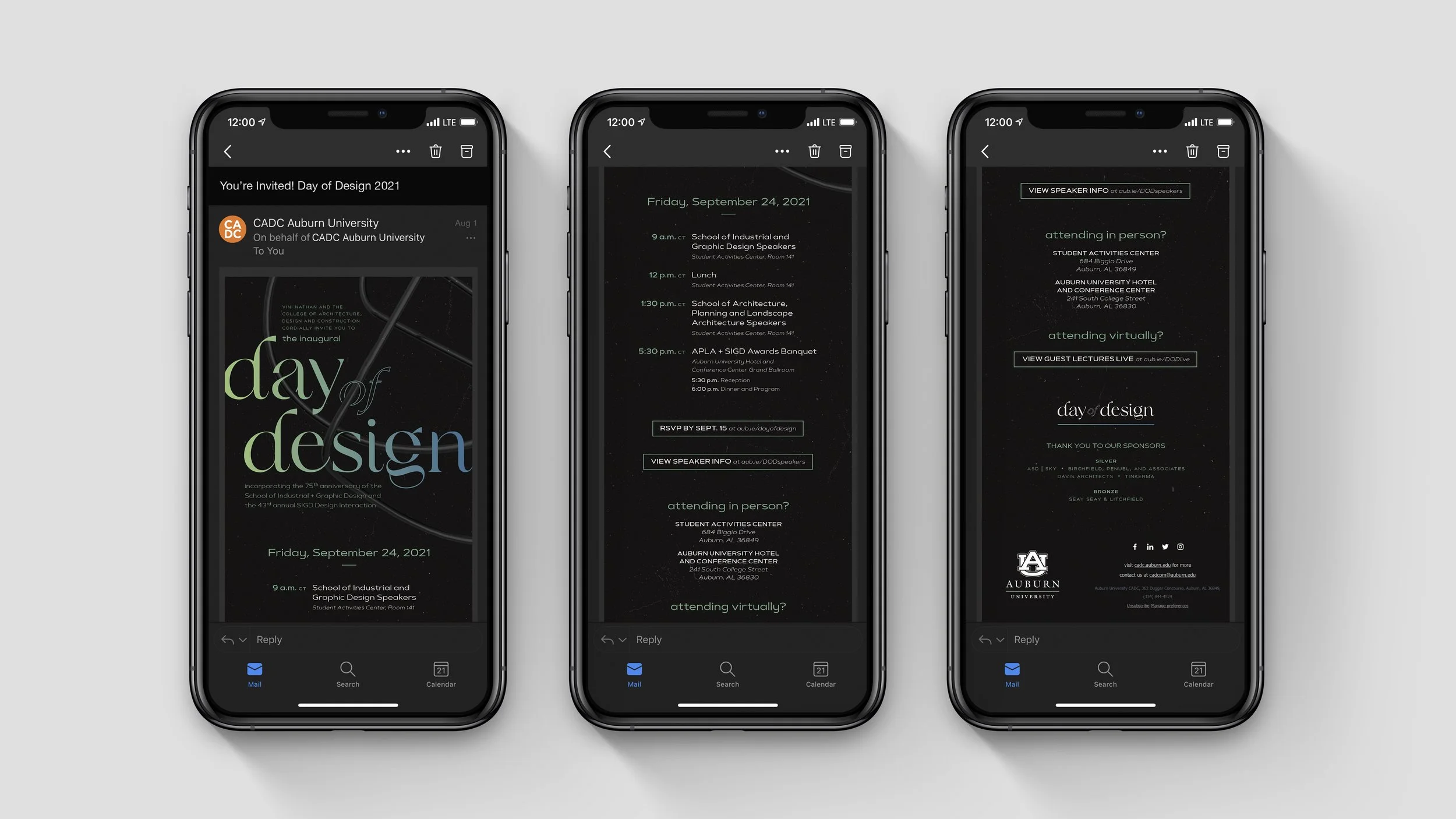
The digital invitation was designed to integrate seamlessly within an email newsletter format familiar to faculty, staff and students.
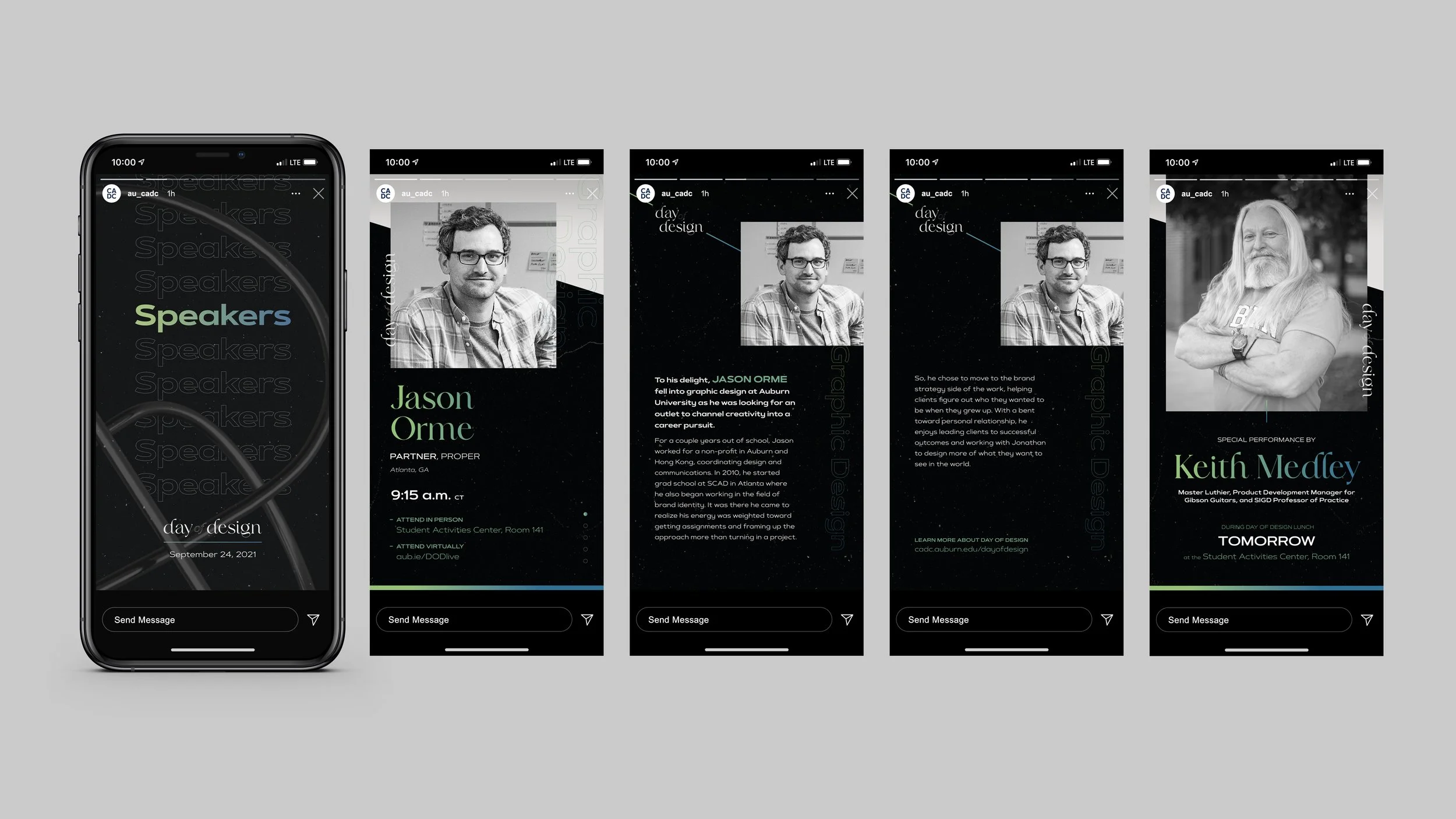
Graphics for social media stories introduced speakers and event details in a clear, sequential format.
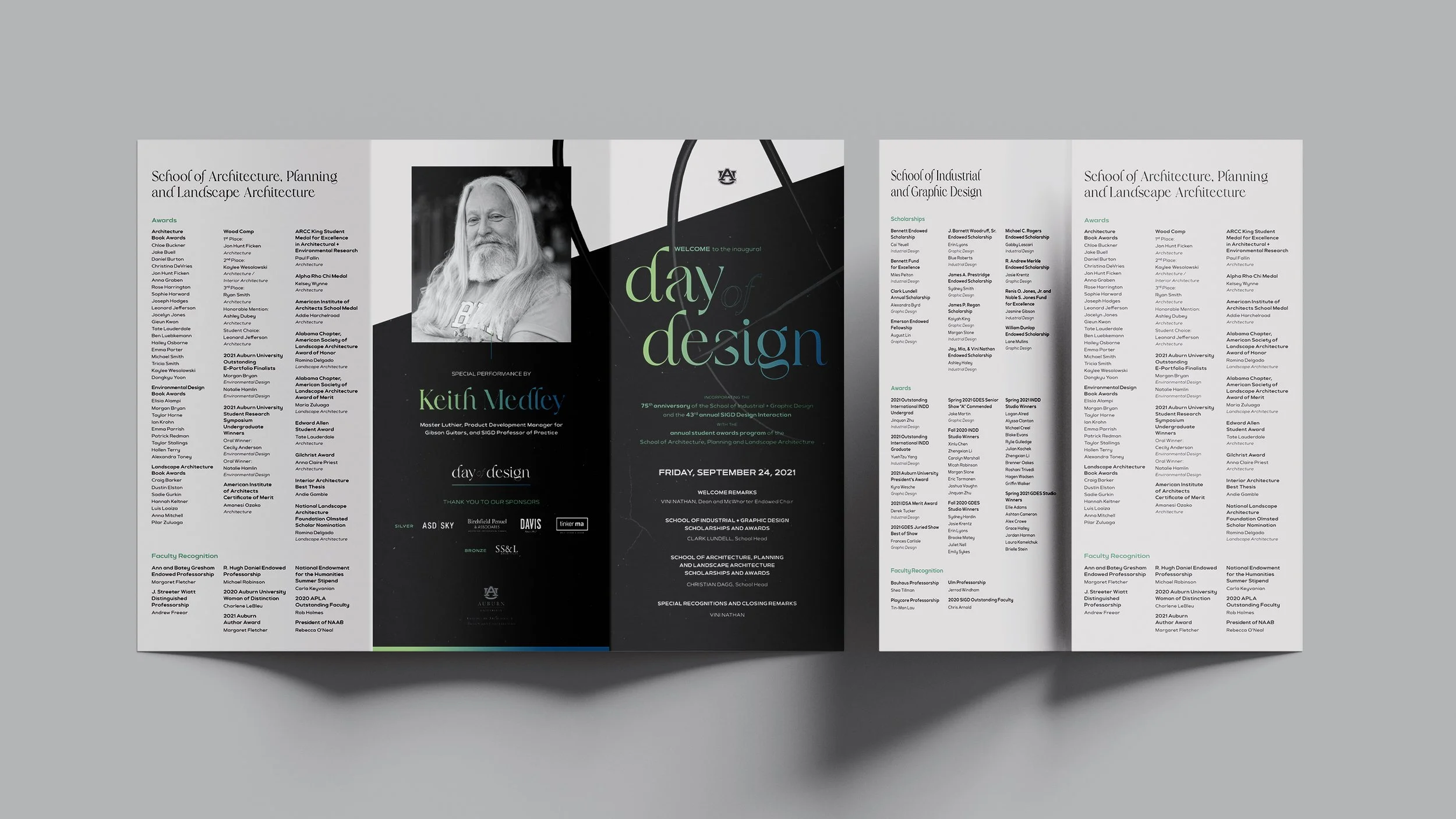
A trifold awards ceremony program accommodated an extensive list of award categories and recipients while maintaining clarity and hierarchy. Four panels were dedicated to awardee information, while the schedule and special guest performance opened and closed the program.
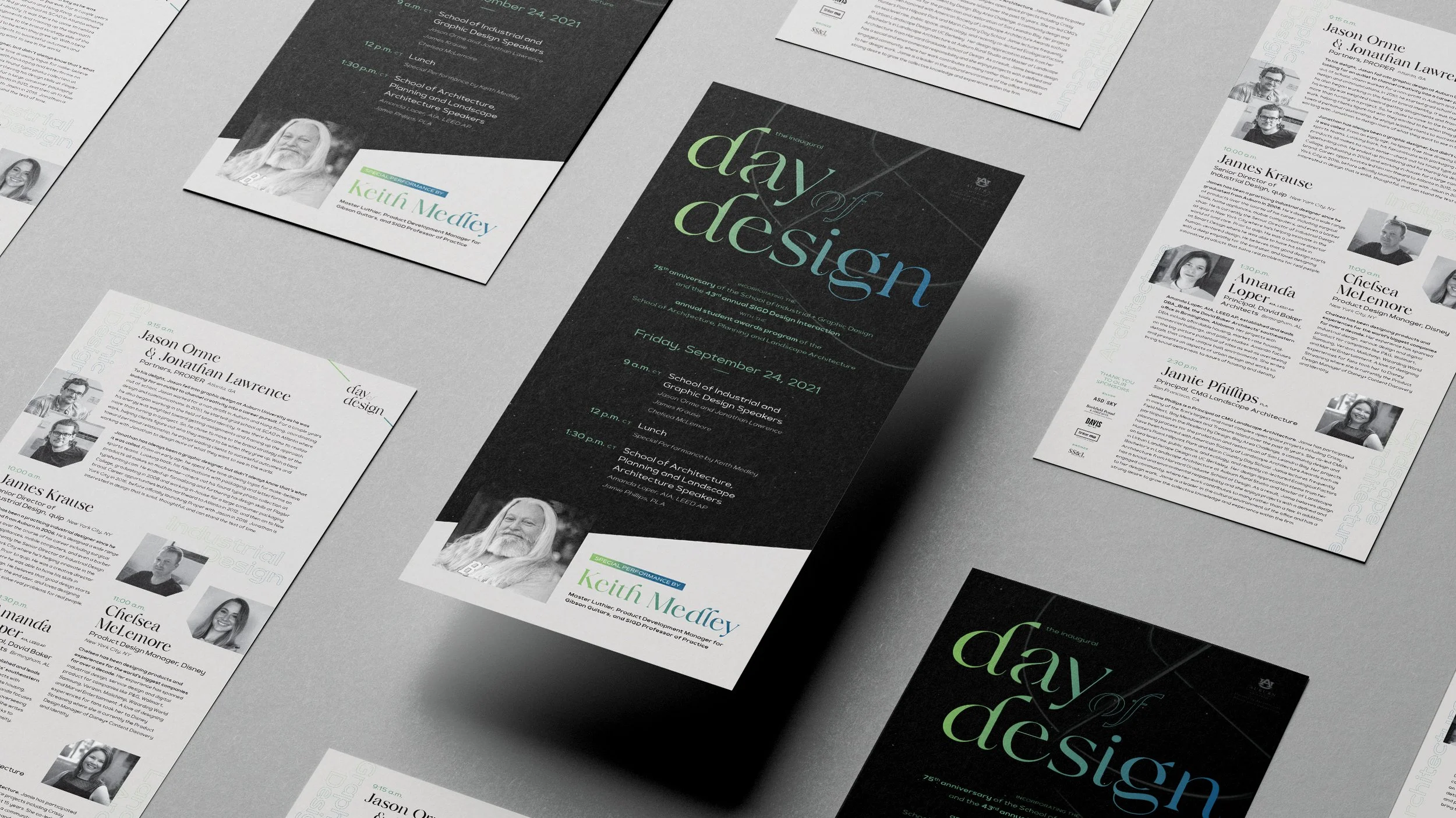
A separate speaker sessions program, shown at the top of this page, balanced a large volume of information while presenting each speaker equally. The schedule and special guest performance appeared on the front, while detailed speaker information was organized on the reverse.
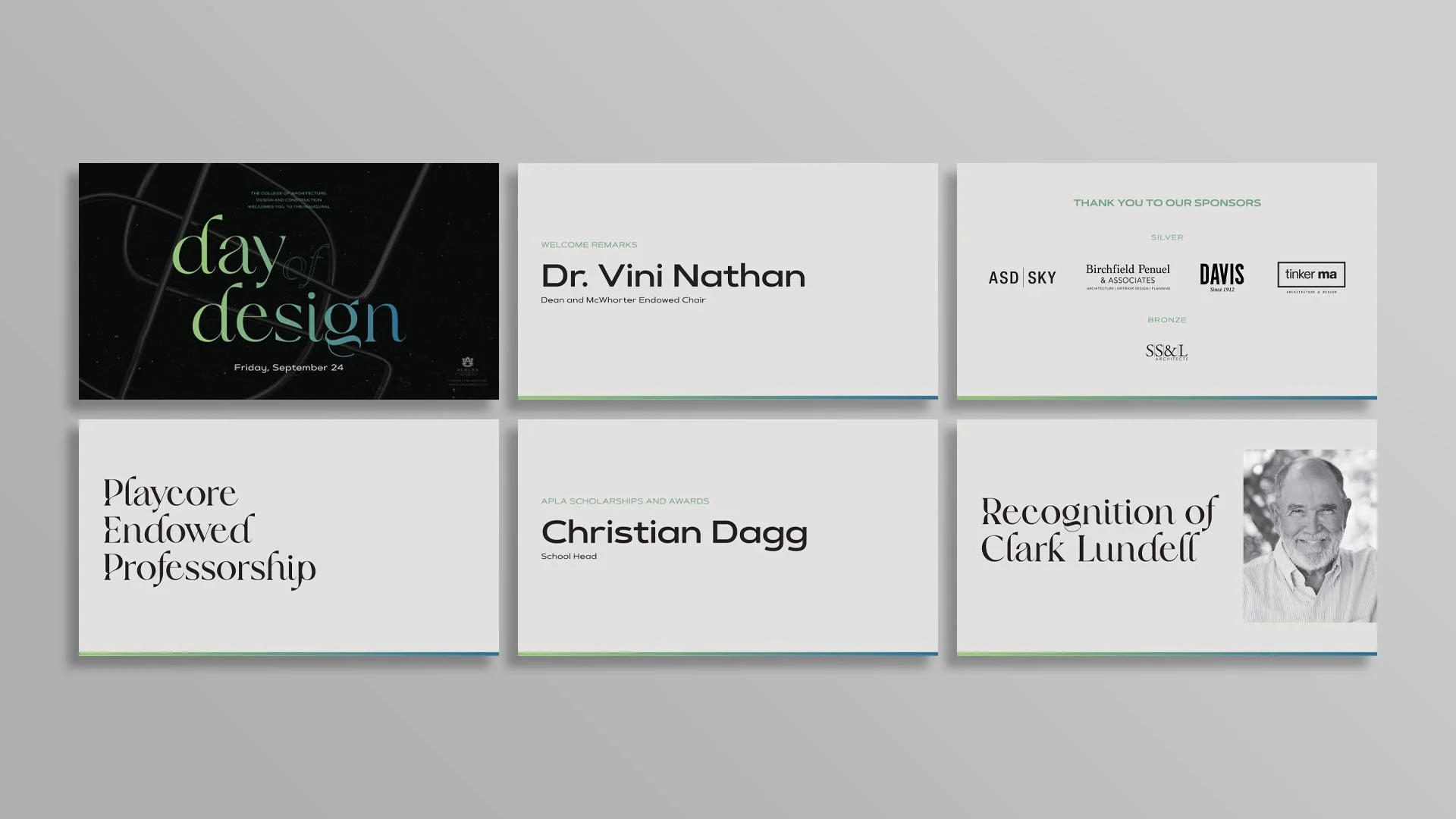
The awards slideshow was designed within the established visual system but used restrained typography and minimal layouts to support clear presentation during the ceremony.